
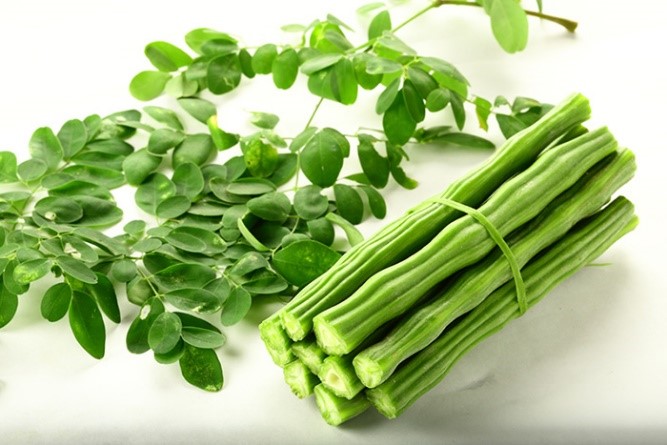
Moringa
Scientific name: Moringa oleifera Lam.
Last name: Moringa
Family: MORINGACEAE
Common name: Horse radish tree, Drumstick
Properties: In folk medicine texts, Moringa leaves are used as a paste on wounds to help stop bleeding, induce sleep, act as a laxative, and diuretic. and help cure fever The flowers and fruit are used as a tonic, diuretic, and to cure fever. The ground seeds are used as a poultice to relieve joint pain and fever. In the overview of scientific information Most of which is research at the cellular and animal levels, it has been found that Moringa has many interesting effects, such as the effect of lowering blood pressure. Anti-tumor, anti-cancer, reduces cholesterol levels Prevents stomach ulcers Prevent hepatitis Anti-oxidation antibacterial Reduce sugar levels and anti-inflammatory effects
Important substances: Contains important flavonoid substances. Rutin and quercetin (rutin and quercetin), alkaloids (alkaloids), lutein and caffeoylquinic acids (lutein and caffeoylquinic acids)
Parts used: roots, stems, leaves, pods and seeds.